Birds were what became of the dinosaurs. Those mountains of flesh whose petrified bones were on display at the Museum of Naturla History had done some brillian retooling over the ages and could now be found in the form of orioles in the sycamores across the street. As solutions to the problems of earthly existence, the dinosaurs had been pretty great, but blue headed vieos and yellow warblers and white throated sparrows -- feather light, hollow boned, full of song -- were even greater. Birds were like dinosaurs better selves. They had short lives and long summers. We all should be so luck as to leave behind such heirs-- from My Bird Problem by Jonathan Franzen
Monday, October 09, 2006
Short lives, long summers


Friday, October 06, 2006
US too hard up for hard power?
US "soft power" may have been seriously damaged by Guantanamo, the abolition of habeas corpus etc. But when it comes to hard power, one of the things that really matters, behind the guns, is the money. Debt (largely to the US) destroyed British power in World War Two and after, and turned Britain into a editorial comes close to suggesting this:
...While foreign investors were putting up most of the $1.5 trillion the federal government has borrowed since 2001, they were also snapping up hundreds of billions of dollars in private sector securities, transactions that have been a big source of the easy money that allowed Americans to borrow heavily against their homes.In How to Fix the Global Economy (3 Oct) Joseph Stiglitz wrote:
The result... is that for the first time in at least 90 years, the United States is now paying noticeably more to foreign creditors than it receives from its investments abroad.
China knows well the terms of its hidden “deal” with the United States: China helps finance the American deficits by buying treasury bonds with the money it gets from its exports. If it doesn’t, the dollar will weaken further, which will lower the value of China’s dollar reserves (by the end of the year, these will exceed $1 trillion). Any country that might benefit from China’s loss of export market share would put its money into a strong currency, like the euro, rather than the unstable and weakening dollar — or it might choose to invest the money at home, rather than holding more reserves. In short, the United States would find it increasingly difficult to finance its deficits, and the world as a whole might face greater, not less, instability.Stiglitz suggests that, drawing on ideas from Keynes, a new reserve system based on a new international currency, could help stabilise the world economy.
Wednesday, October 04, 2006
China: time for a politics of climate change
Yesterday I joined Isabel Hilton and Becky Hogge in talking about chinadialogue.net with the Democracy Club in London. Isabel gave an overview. Becky described some of the technical challenges and achievements. This was fascinating and is worth a post and perhaps an article and discussion on chinadialogue itself. Some good points also came up in the discussion that followed. But here I want to publish some things I said regarding China's emissions, and the country's responsibilities.
My main point -- or challenge to engage -- for activists and others both inside and outside China is as follows. Yes, the richest industrialised nations need to act faster and more effectively to tackle climate change at home; but failure in the West is not a reason for people in China not to act urgently too. China may already exceed its share of globally sustainable emissions or is close to doing so, and the trend is negative notwithstanding all sorts of "green' investments. For reasons of basic self interest as well as natural justice, it is time for people in China to start engaging more actively with each other and the outside world on the politics of climate change.
The key points (or so I argue) are three. Here they are as a, b and c, followed by a request for responses:
A. China is close to or already exceeding its fair share of a "safe" level of emissions, and things are likely to get worse quickly.
Global emissions are currently about 7bn tonnes of carbon a year. China is the second largest single polluter, although the EU as a whole emits more. In 2004 China’s total emissions were about 1.2 billion tonnes – that is, about 17%, or slightly more than one sixth of the global total.
About one in five people on this planet is Chinese (actually 22%). If present day global emissions were allocated equally China would be entitled to about 1.5bn tonnes.
At recent rates of growth, Chinese emissions could take little more than three years to grow from 1.2bn tonnes, the level in 2004 to 1.5bn tonnes. This is assuming 10% annual economic growth and emissions rising more or less in step, which given consumption trends in China –- rising automobile ownership, more appliances in every household etc –- looks to me like a plausible scenario, although not of course the only one. (Incidentally, 10% growth gives a doubling time of a little over 8 years).
B. Where next?
Suppose you want to avoid dangerous climate change, or at least reduce the risk of it happening. The first step would be to slow and then stop the increasing rate of emission of greenhouse gases to the atmosphere. The next step would be to reduce total global emissions.
A proposal for a first step embraced by some policy makers in rich industrial countries is that emissions be stabilised at twice pre-industrial levels – that at approximately 560ppm of C02 (see, for example, Socolow et al, Scientific American, Sept 2006).
Each part per million of C02 corresponds to about 2.1bn tonnes of atmospheric carbon. The current level – about 380ppm – is 800bn tonnes. 560ppm would mean about 1,200 tonnes. So another 400bn tonnes would take us to 1,200. On this reasoning, it looks as if the world could emit another 400 billion tonnes, but no more, and not exceed this target.
Some people argue that we could actually emit twice that amount because the oceans and vegetation on land will soak up half of it. That argument has been challenged. Changes in the earth system as the world warms can mean that vegetation and soils become a net source rather than sink; using the oceans as a sink is causing acidification which is likely to have other serious consequences).
Further, it is open to question whether a doubling of GHG concentrations is “safe” – that is whether it means we avoid some [potentially disasterous impacts in China], and others. Advisors to the British Government and others have suggested that 450 or even 400ppm may be nearer the mark (see, for example, Schellnhuber et al Avoiding Dangerous Climate Change - and this discussion at RealClimate)
Virtually every advance in climate science points to bigger human impacts and more serious consequences than previously predicted. That being the case, caution is wise. And time is short. 560ppm would allow 57 years at present rate. 450 would allow 21 years. 400 would allow just 7 years. But in each case, emissions would have to be zero in the year after so there is even less time available for a feasible and rational transition, supposing you wanted to do it.
C. A political challenge
One of the first things that comes up when China and climate change are mentioned in the same breath is that the richest countries, historically and still today, are by far the biggest emitters per head, and have the responsibility to act first. This is certainly true. And it is often stressed, including, on chinadialogue, by Yu Hongyuan of the Shanghai Institute for International Studies.
The responsibility of the rich industrialised nations to act first was recognised in the UNFCC in 1992 and in the Kyoto Protocol of 1997. China is a signatory to the Protocol, and benefits from some investment in clean and renewable energy projects under the CDM. The Europeans are also offering modest help for one coal plant with CCS by 2020 (you can read more on this an article by Jon Gibbins on chinadialogue).
In my view, as well as that of many others, the present level of commitment in rich countries is inadequate. These countries need to massively ratchet up their commitment to energy efficiency, demand management and clean energy at home and abroad. But – and again this is my view, that does not mean China has no responsibilities. Recall that is already close to or even past its “fair share” of the 7billion tonnes per year that is probably not safe.
In UK, after more than 20 years of concerted effort from scientists and their allies, we now have a mainstream politics of climate change. (Incidentally, openDemocracy hosted the first forum and debate with this title in spring 2005. It’s still there to view)
So far Britain’s politics of climate change includes such delightful spectacles as the son of Margaret Thatcher’s favourite corporate raider calling for limits on aviation at the Conservative Party Conference, and a motion being defeated.
It also includes David Miliband, the environment secretary, telling the Labour Party Conference that cutting carbon emissions should become the European Union’s primary purpose. He told delegates the EU would appeal to a new generation only if it came to stand for Environmental Union.
(It is notable by the way that both Zac Goldsmith and David Milliband are among the youngest members of the shadow team and the government)
Could something like this emerge in China? So far there are few outward signs. In November this year, for example, there will be demonstrations in over 50 countries calling for faster action to reduce emissions by the Conference of the Parties to the Climate Change Convention (). Activists in some poor and vulnerable countries, such as Bangladesh, will be taking part. Two of the major countries where no events are listed are China and India.
Perhaps the first steps for a visible politics of climate change China will come elsewhere. Maybe they will be modelled on the kind of work that Ma Jun, a writer and campaigner on water issues, is doing with his colleagues. Ma Jun recently launched a site that names 2,500 companies that have broken pollution regulations in the water environment (see his recent interview on chinadialogue).
Responses, please
If you have read this far and are still awake and interested, please let me know what you think is right, wrong (irrelevant, passe) with the arguments I have outlined. I haven't even touched on inequalities within China, for example. My calculations regarding emissions should be checked too.
The full text on which I based my remarks is attached as a comment.
Perhaps this could help inform future dialogue on chinadialogue or elsewhere.
By the way, Isabel disagreed that there were few signs of a politics of climate change inside China. She pointed out that in a one party state (albeit a fragile one) much of the politics tends to take place inside the party. Deputy Environment Minister Pan Yue, she said, was among those pushing for political change on this issue.
My main point -- or challenge to engage -- for activists and others both inside and outside China is as follows. Yes, the richest industrialised nations need to act faster and more effectively to tackle climate change at home; but failure in the West is not a reason for people in China not to act urgently too. China may already exceed its share of globally sustainable emissions or is close to doing so, and the trend is negative notwithstanding all sorts of "green' investments. For reasons of basic self interest as well as natural justice, it is time for people in China to start engaging more actively with each other and the outside world on the politics of climate change.
The key points (or so I argue) are three. Here they are as a, b and c, followed by a request for responses:
A. China is close to or already exceeding its fair share of a "safe" level of emissions, and things are likely to get worse quickly.
Global emissions are currently about 7bn tonnes of carbon a year. China is the second largest single polluter, although the EU as a whole emits more. In 2004 China’s total emissions were about 1.2 billion tonnes – that is, about 17%, or slightly more than one sixth of the global total.
About one in five people on this planet is Chinese (actually 22%). If present day global emissions were allocated equally China would be entitled to about 1.5bn tonnes.
At recent rates of growth, Chinese emissions could take little more than three years to grow from 1.2bn tonnes, the level in 2004 to 1.5bn tonnes. This is assuming 10% annual economic growth and emissions rising more or less in step, which given consumption trends in China –- rising automobile ownership, more appliances in every household etc –- looks to me like a plausible scenario, although not of course the only one. (Incidentally, 10% growth gives a doubling time of a little over 8 years).
B. Where next?
Suppose you want to avoid dangerous climate change, or at least reduce the risk of it happening. The first step would be to slow and then stop the increasing rate of emission of greenhouse gases to the atmosphere. The next step would be to reduce total global emissions.
A proposal for a first step embraced by some policy makers in rich industrial countries is that emissions be stabilised at twice pre-industrial levels – that at approximately 560ppm of C02 (see, for example, Socolow et al, Scientific American, Sept 2006).
Each part per million of C02 corresponds to about 2.1bn tonnes of atmospheric carbon. The current level – about 380ppm – is 800bn tonnes. 560ppm would mean about 1,200 tonnes. So another 400bn tonnes would take us to 1,200. On this reasoning, it looks as if the world could emit another 400 billion tonnes, but no more, and not exceed this target.
Some people argue that we could actually emit twice that amount because the oceans and vegetation on land will soak up half of it. That argument has been challenged. Changes in the earth system as the world warms can mean that vegetation and soils become a net source rather than sink; using the oceans as a sink is causing acidification which is likely to have other serious consequences).
Further, it is open to question whether a doubling of GHG concentrations is “safe” – that is whether it means we avoid some [potentially disasterous impacts in China], and others. Advisors to the British Government and others have suggested that 450 or even 400ppm may be nearer the mark (see, for example, Schellnhuber et al Avoiding Dangerous Climate Change - and this discussion at RealClimate)
Virtually every advance in climate science points to bigger human impacts and more serious consequences than previously predicted. That being the case, caution is wise. And time is short. 560ppm would allow 57 years at present rate. 450 would allow 21 years. 400 would allow just 7 years. But in each case, emissions would have to be zero in the year after so there is even less time available for a feasible and rational transition, supposing you wanted to do it.
C. A political challenge
One of the first things that comes up when China and climate change are mentioned in the same breath is that the richest countries, historically and still today, are by far the biggest emitters per head, and have the responsibility to act first. This is certainly true. And it is often stressed, including, on chinadialogue, by Yu Hongyuan of the Shanghai Institute for International Studies.
The responsibility of the rich industrialised nations to act first was recognised in the UNFCC in 1992 and in the Kyoto Protocol of 1997. China is a signatory to the Protocol, and benefits from some investment in clean and renewable energy projects under the CDM. The Europeans are also offering modest help for one coal plant with CCS by 2020 (you can read more on this an article by Jon Gibbins on chinadialogue).
In my view, as well as that of many others, the present level of commitment in rich countries is inadequate. These countries need to massively ratchet up their commitment to energy efficiency, demand management and clean energy at home and abroad. But – and again this is my view, that does not mean China has no responsibilities. Recall that is already close to or even past its “fair share” of the 7billion tonnes per year that is probably not safe.
In UK, after more than 20 years of concerted effort from scientists and their allies, we now have a mainstream politics of climate change. (Incidentally, openDemocracy hosted the first forum and debate with this title in spring 2005. It’s still there to view)
So far Britain’s politics of climate change includes such delightful spectacles as the son of Margaret Thatcher’s favourite corporate raider calling for limits on aviation at the Conservative Party Conference, and a motion being defeated.
It also includes David Miliband, the environment secretary, telling the Labour Party Conference that cutting carbon emissions should become the European Union’s primary purpose. He told delegates the EU would appeal to a new generation only if it came to stand for Environmental Union.
(It is notable by the way that both Zac Goldsmith and David Milliband are among the youngest members of the shadow team and the government)
Could something like this emerge in China? So far there are few outward signs. In November this year, for example, there will be demonstrations in over 50 countries calling for faster action to reduce emissions by the Conference of the Parties to the Climate Change Convention (). Activists in some poor and vulnerable countries, such as Bangladesh, will be taking part. Two of the major countries where no events are listed are China and India.
Perhaps the first steps for a visible politics of climate change China will come elsewhere. Maybe they will be modelled on the kind of work that Ma Jun, a writer and campaigner on water issues, is doing with his colleagues. Ma Jun recently launched a site that names 2,500 companies that have broken pollution regulations in the water environment (see his recent interview on chinadialogue).
Responses, please
If you have read this far and are still awake and interested, please let me know what you think is right, wrong (irrelevant, passe) with the arguments I have outlined. I haven't even touched on inequalities within China, for example. My calculations regarding emissions should be checked too.
The full text on which I based my remarks is attached as a comment.
Perhaps this could help inform future dialogue on chinadialogue or elsewhere.
By the way, Isabel disagreed that there were few signs of a politics of climate change inside China. She pointed out that in a one party state (albeit a fragile one) much of the politics tends to take place inside the party. Deputy Environment Minister Pan Yue, she said, was among those pushing for political change on this issue.
"A disaster by any measure"
"Iraq now seems all but certain to be left broken as a state, immersed in sectarian violence and terrorism, in far worse condition than it was under Saddam Hussein's secular dictatorship (which would have come to an end when Saddam died, or when he was overturned by a coup, or a revolt, as has happened to all of modern Iraq's previous leaders).-- William Pfaff, 21 September
Afghanistan already is once again the world's principal producer of opium poppies, dominated by regional warlords, with the Taliban back and in control of a large part of the country beyond Kabul; the central government is feeble and American and NATO forces are struggling to enforce Kabul's authority.
For those who like conspiratorial explanations, involving oil and Israel, consider that now Iraq will produce little or no oil for the United States, or anyone else, for years to come, and the Saudi monarchy and the Gulf oil-producer governments are newly threatened by fundamentalist militants.
Saddam Hussein has been eliminated as a distant threat to Israel, and a ring of aggressive Shiite states and movements has been substituted, with Hezbollah having already brought Israel under rocket fire, and humiliated the Israeli army. Iran's influence in the world has grown larger than ever.
These results are due in part to the amateur geopoliticians of the neoconservative New American Century initiative, and their Washington allies. Israel needed no such friends, nor does George W. Bush, who with their help, on the fifth anniversary of the September 11 attacks, looked more than ever as though he'll finish his term as the most disastrous president in American history."
Tuesday, October 03, 2006
India not so shining
"[India's] hi-tech boom... is seen by some as a force that is transforming Indian society, but the reality is more prosaic. The IT sector employs about 1 million people in a country where 8 million join the labour force each year. Employment in the formal manufacturing sector has fallen over the past decade. Meanwhile, agriculture, the source of livelihood for three in every four people, is trapped in a cycle of low growth and under-investment.-- Kevin Watkins
Poor public services reinforce the impact of unbalanced growth. Uttar Pradesh, with a population bigger than Germany and Britain combined, has immunisation rates that compare unfavourably with those in Mali, and child death rates to match Sudan's."
-- Aravind Adiga
"Few foreign tourists visit Kanpur, and the city gets little attention even within India, where most people would rather visit, invest and live in places like Bangalore or Gurgaon, which epitomize the shining new India of technology and rapid economic growth. But far from being a relic of the past, Kanpur, which is among India's most polluted cities, is a harbinger of the future."
Thursday, September 28, 2006
Indigenes
"I never saw an Arab or an African soldier in my history books", says 23-year-old Salima, a student from the Paris suburb of Seine-St-Denis. (1)
"Ultimately, [the] is a challenge as much for European societies as for European governments. Much of the discrimination in France, for example, is the result of decisions by individual employers, who are going against the grain of public policy and the law of the land. It's the personal attitudes and behavior of hundreds of millions of non-Muslim Europeans, in countless small, everyday interactions, that will determine whether their Muslim fellow citizens begin to feel at home in Europe or not. Together, of course, with the personal choices of millions of individual Muslims, and the example given by their spiritual and political leaders. Is it likely that Europeans will rise to this challenge? I fear not. Is it still possible? Yes." -- Timothy Garton Ash (2)
1. French film aims to unite nation, BBC online, 27 Sep http://news.bbc.co.uk/2/hi/europe/5386356.stm
2. Islam in Europe, NYRB, 6 Sep http://www.nybooks.com/articles/19371
"Ultimately, [the] is a challenge as much for European societies as for European governments. Much of the discrimination in France, for example, is the result of decisions by individual employers, who are going against the grain of public policy and the law of the land. It's the personal attitudes and behavior of hundreds of millions of non-Muslim Europeans, in countless small, everyday interactions, that will determine whether their Muslim fellow citizens begin to feel at home in Europe or not. Together, of course, with the personal choices of millions of individual Muslims, and the example given by their spiritual and political leaders. Is it likely that Europeans will rise to this challenge? I fear not. Is it still possible? Yes." -- Timothy Garton Ash (2)
1. French film aims to unite nation, BBC online, 27 Sep http://news.bbc.co.uk/2/hi/europe/5386356.stm
2. Islam in Europe, NYRB, 6 Sep http://www.nybooks.com/articles/19371
Wednesday, September 27, 2006
Joining climate dots
In the summer Martin Rees called for a radical increase in spending energy R&D to tackle climate change. (see Science 313, 571. 2006)
On 25 Sep it was reported that the Earth may be close to the warmest it has been in the last million years.
On 26 Sep Tony Blair (keep a straight face, now) called for radical overhaul of energy policy.
And if the political will really was there where would the money come from?
On 26 Sep Tom Burke made this modest proposal on openDemocracy:
Western NGOs concerned with international development and justice could strengthen their case against agricultural subsidies in rich [European] countries, recommending reallocation to both energy R&D (and some the "good" bits of the Lisbon Agenda) and agricultural and use adaptation in Europe and its "near abroad".
Maybe our Chinese friends can help somehow.
Meanwhile, in another part of the wood, Nature reports that the Bush administration has blocked release of a report that suggests global warming is contributing to the frequency and strength of hurricanes.
On 25 Sep it was reported that the Earth may be close to the warmest it has been in the last million years.
On 26 Sep Tony Blair (keep a straight face, now) called for radical overhaul of energy policy.
And if the political will really was there where would the money come from?
On 26 Sep Tom Burke made this modest proposal on openDemocracy:
"Europe currently spends 46% of its annual budget on a problem it has already solved: food security. It spends practically nothing on a problem that threatens the livelihoods and wellbeing of every single citizen in the union: climate security. It is time to look to the future rather than remain trapped in the past. That means a radical reallocation of European funds from the common agricultural policy into a climate security fund."I'm not saying this is the only idea in town or even the best, but it is one for discussion in search for justice that balances liberty and security.
Western NGOs concerned with international development and justice could strengthen their case against agricultural subsidies in rich [European] countries, recommending reallocation to both energy R&D (and some the "good" bits of the Lisbon Agenda) and agricultural and use adaptation in Europe and its "near abroad".
Maybe our Chinese friends can help somehow.
Meanwhile, in another part of the wood, Nature reports that the Bush administration has blocked release of a report that suggests global warming is contributing to the frequency and strength of hurricanes.
Sunday, September 24, 2006
A triumph for state terror?
"Consider the juxtaposition of the phrase 'free thinking for the world' adorning the magazine's logo with Derakhshan's disparagement of an intellectual engaging in "comparative analysis of socio-political change in contemporary east-central Europe and the Islamic Republic of Iran". Perish the thought that a scholar should be free to undertake such studies and explore such terrain openly" -- Danny Postel on Jahanbegloo, Hoder and openDemocracy http://www.opendemocracy.net/democracy-irandemocracy/jahanbegloo_postel_3930.jsp
Saturday, September 23, 2006
The Lost
"It is sobering to realize that one little story can keep someone living on in a descendent's memory. Once even that is forgotten, the person vanishes as if he never existed" -- Charls Simic in a review of Daniel Mendelson's The Lost
Sunday, September 17, 2006
Full of noises
"Walnut Tree Farm, the house he eventually completed, and in which he died a month ago, is made largely of wood. It is as close to a living thing as a building can be. When big easterlies blow, its timbers creak and groan "like a ship in a storm", as Deakin put it, "or a whale on the move". He kept the doors and the windows open, in order to let air and animals circulate. Leaves gusted in through one door and out of another. Swallows flew to and from their nest in the main chimney. It was a house which breathed. Spiders slung swags and trusses of silk in every corner. As I sat with Deakin, 10 days before his death, a brown cricket with long spindly antennae clicked along the edge of an old biscuit tin".-- Robert Macfarlane on Roger Deakin
Saturday, September 16, 2006
The empire of Islam
"In Pakistan, rape is dealt with under Islamic laws known as the Hudood Ordinances. These criminalise all sex outside marriage. So, under Hudood, if a rape victim fails to present four male witnesses to the crime, she herself could face punishment. This has made it almost impossible to prosecute rape cases. According to the country's independent Human Rights Commission, a woman is raped every two hours and gang-raped every eight hours in Pakistan".-- How Pakistan's rape reform ran aground
"Islam ...is strong enough to survive Islamism. Perhaps, in time, the religion's centrality will subside, but, for the forseeable future, the Islamic enlightenment in which so many Western thinkers have placed their hopes -- that is, secularism -- will not sweep the Muslim world. The Islamic revival, and its attendant struggles and ills, is less like the eighteenth century in Europe than like the sixteenth, the age of Luther".George Packer in The Moderate Martyr, a profile of Mahmound Muhamad Taha and his legacy in Sudan.
P.S. 17 Sept:
"The attackers shot the [seventy year old] nun three times in the back at a children's hospital in the south of [Mogadishu]" - BBC
Friday, September 15, 2006
Military solutions to climate change

This map shows the rough location of forces from Europe's Frontex border agency -- in this case largely Spanish, Portuguese, Italian and Senegalese -- attempting to guard the doors of fortress Europe. The accompanying BBC story reports that some authorities describe the influx of about 20,000 West Africans to the Canary Islands as Spain's greatest humanitarian emergency since the Civil War.
The causes of migration from West Africa and elsewhere to Europe are various, and may at present have little to do with climate change. But if conditions in large parts of Africa deteriorate significantly as a result of climate change (as they may do in Bangladesh and elsewhere) then could we be looking at "real" numbers -- hundreds of thousands of refugees or more? John Schellnhuber has referred to the prospect of this scenario. What kind of maps would we be looking at then?
Several years ago Aubrey Meyer attributed the quote "there is no military solution to climate change" to Colin Powell (who has just distinguished himself by coming out against Bush's politics of fear). Regardless of whoever said it first, will people listen?
Climate: UK numbers and US rumours
The report from Kevin Anderson and colleagues at the Tyndall Centre outlining how the UK could "do its fair share" in keeping global atmospheric concentrations of greenhouse gases below 450ppm looks like a serious, professional bit of work (press release here, full report -- a 175 page pdf -- here, sensational Guardian coverage here). It charts a route to reducing UK emissions by 70% by 2030, with greater cuts beyond that.
Also interesting is a report in Platts that the Bush administration "may announce as early as next week a goal of stabilizing carbon dioxide levels in the global atmosphere at 450 parts per million by the year 2106".
This rumour, if proved true, looks like a canny bit of political triangulation: seize your opponents' issue and sound visionary while not actually committing to anything that requires real action or pain. 2106 is like 110 years from now, man. Dave Hamilton of the Sierra Club is reportedly of this view, saying that the stabilisation target should be reached much sooner, and by 2050 at the latest.
But Jon Gibbins argues it is not as simple as that: atmospheric concentrations will actually have to be lower than 450ppm in 2050 if (barring what he thinks are unlikely developments in capacity to draw down CO2 from the atmosphere at an accelerated rate) there is to be a chance of stabilising at that level by 2106. If correct, this would mean that if the Bush administration were serious about their target they would have to act even more urgently than even their harshest critics suggest -- a corollary that may have escaped them so far.
The reasoning here is simpler than I may have made it sound. An explanation from Jon is attached, with his kind permission.
Also interesting is a report in Platts that the Bush administration "may announce as early as next week a goal of stabilizing carbon dioxide levels in the global atmosphere at 450 parts per million by the year 2106".
This rumour, if proved true, looks like a canny bit of political triangulation: seize your opponents' issue and sound visionary while not actually committing to anything that requires real action or pain. 2106 is like 110 years from now, man. Dave Hamilton of the Sierra Club is reportedly of this view, saying that the stabilisation target should be reached much sooner, and by 2050 at the latest.
But Jon Gibbins argues it is not as simple as that: atmospheric concentrations will actually have to be lower than 450ppm in 2050 if (barring what he thinks are unlikely developments in capacity to draw down CO2 from the atmosphere at an accelerated rate) there is to be a chance of stabilising at that level by 2106. If correct, this would mean that if the Bush administration were serious about their target they would have to act even more urgently than even their harshest critics suggest -- a corollary that may have escaped them so far.
The reasoning here is simpler than I may have made it sound. An explanation from Jon is attached, with his kind permission.
Thursday, September 14, 2006
Daughter, get your Irgun
"The native population, civilised or uncivilised, have always stubbornly resisted the colonists." It was thus "utterly impossible to obtain the voluntary consent of the Palestine Arabs", and the Zionists must be ready to use force by building an "Iron Wall".--Geoffrey Wheatcroft quoting Vladimir Jabotinsky in Olmert should have more of an insight than most into terrorism
See also Cut off, Gazan economy nears collapse by Steven Erlanger
Wednesday, September 13, 2006
Changing tunes
Conservative and Labour politicians are heeding the tide of British public opinion with recent statements attempting to put distance between themselves and the thugs in the Bush administration. First David Cameron attacked the “unrealistic and simplistic” neoconservative philosophy (to the author of Neoconservatism: why we need it, I say "Ha ha ha ha ha ha"). Then Charlie Falconer calls Guantanamo "a shocking affront to the principles democracy".
Regarding what to do about Afghanistan, British foreign policy is still in use-full-force-mode. Informed and thoughtful voices such as Rory Stewart, who served with the British mission to southern Iraq and seems to know Afghanistan quite well too, are asking whether putting more force into the south may only inflame affront to local identity and increase the sense of threat to local power elites. The question I haven't heard much asked is how far if at all those local interests can be split from others with, shall we say, an internationalist mission, not to speak of how if at all heroin supply could be reduced.
Regarding what to do about Afghanistan, British foreign policy is still in use-full-force-mode. Informed and thoughtful voices such as Rory Stewart, who served with the British mission to southern Iraq and seems to know Afghanistan quite well too, are asking whether putting more force into the south may only inflame affront to local identity and increase the sense of threat to local power elites. The question I haven't heard much asked is how far if at all those local interests can be split from others with, shall we say, an internationalist mission, not to speak of how if at all heroin supply could be reduced.
Friday, September 08, 2006
More torture
"Many of the harsh interrogation techniques repudiated by the Pentagon ... would be made lawful by legislation put forward the same day by the Bush administration. And the courts would be forbidden from intervening". (more)
And collective punishment in Gaza continues with Israeli military action "creating suffering and mass despair rather than any desire for political compromise", according to Karen Aybzayd of UNRWA.
And collective punishment in Gaza continues with Israeli military action "creating suffering and mass despair rather than any desire for political compromise", according to Karen Aybzayd of UNRWA.
"Whatever it costs"
John Ashton argues on BBC online today that:
This is something that it would be useful to examine further (including, perhaps, in context of Chinadialogue.net?).
Climate change may be important, but on the morning this story appears, the most popular story on BBC online site is about a man forced to marry a goat.
"We need to see the pursuit of a stable climate as an imperative to be secured whatever it costs through the urgent construction of a low carbon global economy, because the cost of not securing it will be far greater."I have forwarded his piece to colleagues working on development issues, including in Africa. One responds that the ways Ashton chooses and describes his examples may undermine what may otherwise be a strong case.
This is something that it would be useful to examine further (including, perhaps, in context of Chinadialogue.net?).
Climate change may be important, but on the morning this story appears, the most popular story on BBC online site is about a man forced to marry a goat.
Wednesday, September 06, 2006
The Fourth Afghan War
Two quite thoughtful pieces of journalism in recent days on what has gone wrong in Afghanistan. In the 5 Sep New York Times, David Rohde reports from Lashkah Gah, "An Afghan symbol for change, then failure"(with Carlotta Gall contributing from Kabul). And in Financial Times, also on 5 Sep, Rachel Morarjee writes that Afghanistan is on course for failure:
"The invasion of Iraq in 2003 drew attention, money and troops away from Afghanistan as the job of reconstruction was just beginning. The 'sexier aspects of state-building', namely drafting a constitution and holding elections, were the first to be accomplished, [Francesc] Vendrell [special representative of the European Union in Afghanistan] points out. The more painstaking business of paying a police force, training a judiciary and building a competent civil service fell by the wayside, as did channelling aid money in a manner that would create jobs for nskilled labourers".But Rohde and Gall's report suggests that it may not have been so much that the less sexy aspects of state-building fell by the wayside as that they were poorly managed, not to say messed up. The key failure -- d'oh and double d'oh -- was a failure to establish security.
Failure of imagination
"It was on the Thursday after September 11 that 'Persians' first started making sense to me. All those years I'd been teaching it, I'd failed to notice the most obviously remarkable thing about it—the device that transmutes the raw and chaotic stuff of lived history into something bigger, something with a universal resonance. As I have said, the play was produced a mere eight years after the Greeks' fabulous and unexpected victory over their immense foe. How much more striking, then, that Aeschylus—who, it's perhaps necessary to point out, fought in the Persian Wars, and lost a brother in the aftermath of the great naval triumph at Salamis, a description of which, put in the mouth of an impressed Persian, furnishes his play with its glittering rhetorical climax—should have chosen to focus is imaginative sympathy not on the exulting Greeks, but on the sorrowing Persians. Which is to say that in the very moment of their greatest victory, he asked his fellow Athenians to think radically, to imagine something outside of their own experience, to situate the feelings they were having just then—about themselves, about those others—in a vaster frame: one in which they might see that present triumph could induce a complacency that just might bring about future disaster. The sense of these larger, moral themes hovering over the play's spectacle is, in the end, what gives the play a resonance that transcends the particulars of the history it purports to represent. No wonder the Athenians, for whom tragedy was a form of political dialogue as well as popular entertainment, gave it the prize that year."Daniel Mendelsohn - September 11 at the movies
My comment on United 93 is here.
Tuesday, September 05, 2006
Bike to the stars
It's said there is a film festival for everything, and -- lo -- there is a bicycle film festival (hat tip Rob Cawston, who remembered The peach wins!).
A film in Estonian, Russian and Chinese about a bike trip from Mongolia to Nepal looks particularly promising...
A film in Estonian, Russian and Chinese about a bike trip from Mongolia to Nepal looks particularly promising...
Monday, September 04, 2006
Laughter and forgetting
Here’s how brazen Mr. Rumsfeld was when he invoked Hitler’s appeasers to score his cheap points: Since Hitler was photographed warmly shaking Neville Chamberlain’s hand at Munich in 1938, the only image that comes close to matching it in epochal obsequiousness is the December 1983 photograph of Mr. Rumsfeld himself in Baghdad, warmly shaking the hand of Saddam Hussein in full fascist regalia. Is the defense secretary so self-deluded that he thought no one would remember a picture so easily Googled on the Web? Or worse, is he just too shameless to care?Frank Rich -- Donald Rumsfeld's dance with the Nazis
Sunday, September 03, 2006
Naghib Mahfouz
Writing was a joy to him. He loved the sheer act of it, writing every morning and always in longhand. This made the worst drama of his own life particularly cruel. In his 83rd year, a knife-wielding religious fanatic stabbed him in the neck. The would-be killer—inspired, it seems, by clerical objections to allegorical characters in one of Mr Mahfouz's books—failed in his mission, but nerve damage stopped Mr Mahfouz writing for five years.Obituary of Naghib Mahfouz in The Economist
He himself might possibly have dreamed up such an act of sudden violence for one of his plots, but religion would never have been the motive. As he accepted the 1988 Nobel Prize for Literature, he declared himself a happy and grateful receiver of Egyptian, Islamic and Western cultural traditions. What exemplified Islam for him, he said, was the decision by one early Muslim ruler to ransom Christian prisoners in exchange for works of Greek philosophy, medicine and mathematics. It was that curiosity, and generosity of spirit, that Mr Mahfouz wished to prevail in his city.
End of an auld sang
"at least half of these Christians - around 350,000 people - have fled Bush's new Iraq and its violence, mass abductions and economic meltdown...The Christian community in Iraq [was] one of the oldest in the world.William Dalrymple, arguing that Syria"the final place of refuge for Christians in the Middle East is under threat."
...Almost everywhere [across the Middle East] the Christians are leaving, as ill-judged Anglo-American adventures, intended to suppress terrorism, actually have the reverse effect and steadily radicalise the entire region".
Thursday, August 31, 2006
More bad news
It is a moral defeat, from Guantánamo to the Manichaean unilateralism of good against evil. It is a constitutional defeat for a system that permitted Bush to steal an election and whose courts have yet to re-establish fundamental rights. It is a democratic defeat because the politics which permitted it is based on a financially suborned, gerrymandered, often uncheckable, low-turnout voting system that threatens to reduce suffrage in the
Phew! Glad you got that off your chest, Anthony. Have a glass of water. Meanwhile, in Damascus, Hugo Chavez makes whoopy with the president of a police state who is the son of a mass murder.
Bad news from Tehran
Ramin Jahanbegloo, "formerly a prominent thinker and writer on democracy and non-violence", has made his confession. As The Economist noted last week:
Thanks to America's reorganisation of Iraq in favour of its Shia majority and the Islamic Republic's successful cultivation of the new elite there, Iran has a degree of influence to its west that it has not enjoyed since it lost its Mesopotamian possessions in the 17th century...For most of Iran's sad reformers, it is Mr Bush's blunders, not the clergy's inspired leadership, that have put Iran in its present strong position.(P.S. 1 Sep: Rasool Nafisi comments here on Jahanbegloo’s release)
Good news from Columbus
Nature cures
Apples in the Tamar Valley:
Upstream from Cotehele Quay, in his 10-year-old orchard of local varieties, all labelled with names and provenance, James has summer-pruned the cherries, looking forward to a mature orchard of overarching boughs. Some have already developed distinctive shapes above their lichen-encrusted trunks. Speckled wood butterflies flutter beneath the Queens apple tree, over ground strewn with fallen red fruit, and the beauty of
The wolves, who arrived from Poland or other neighbouring countries, live in a largely vacant area of abandoned strip mines and vacated troop training grounds southeast of Berlin.…Other species, like the crane and the white-tailed eagle have also flourished in the east as the human population decreases. "The wolves were gone for over 100 years and first started coming back a while after the Berlin Wall fell," said Matthias Freude of the Brandenburg state environmental office…"They swam across the Neise river or walked across the ice in winter," he added. "There are hardly any people left there now."
Sunday, August 27, 2006
"Fear is a method"
Camus was no pacifist, but he deplored the logic of thinking in categories. "We have witnessed lying, humiliation, killing, deportation and torture, and in each instance it was impossible to persuade the people who were doing these things not to do them, because there is no way of persuading an abstraction, or, to put it another way, the representative of an ideology," he wrote. Terror makes fear, and fear stops thinking. The way out of [behaving like the pathological character Mersault in The Outsider] is to think about particular people, proximate causes , and obtainable objectives -- not an easy thing to do in any circumstance and nearly inpossible in the face of those ideologies, left and right, for which, Camus writes "fear is a method".--from Adam Gopnik's comment in The New Yorker (28 August) on George W. Bush's summer reading list.
Saturday, August 26, 2006
Fianuis
"They took their surnames from the colours of the sky, rainbow and clouds"--Kathleen Jamie quoting Martin Martin in The island at the edge of the world
Friday, August 25, 2006
Al Qaeda -- the whole story?
In his 250th column for openDemocracy, nearly five years on from the attacks in New York and Washington, Paul Rogers says that Al Qaeda "far from being a nihilistic phenomenon...is better described as an unusual transnational revolutionary movement rooted in a quasi-religious ideology which promotes a number of clear-cut aims".
It is vital to know one's enemy, and this description seems like a contribution to a good start on that, but I'm not convinced it's the whole picture.
Others argue that Al Qaeda phenomenon and its associates have many of the characteristics of a cult. How useful is this analogy and what can it teach us?
One other thing. Paul Rogers lists one of Al Qaeda's five near term aims to be the establishment of the Palestinian state. He does not mention the elimination of the state of Israel. But is this not an Al Qaeda aim?
It is vital to know one's enemy, and this description seems like a contribution to a good start on that, but I'm not convinced it's the whole picture.
Others argue that Al Qaeda phenomenon and its associates have many of the characteristics of a cult. How useful is this analogy and what can it teach us?
One other thing. Paul Rogers lists one of Al Qaeda's five near term aims to be the establishment of the Palestinian state. He does not mention the elimination of the state of Israel. But is this not an Al Qaeda aim?
Wednesday, August 23, 2006
Almost miraculous
By the tenth week of gestation, a human embryo is forming 250,000 neurones in the brain every minute. And the rate increases each week thereafter.
Monday, August 21, 2006
Who smote?
I am happy to be alive on the day that Saddam goes on trial for the Anfal, one of the worst crimes of the 1980s in which more than 180,000 people were killed (see here and here). My three wishes are:
- 1) may Saddam and others accused, if any, get a trial that is very clearly fair so that if convicted no reasonable person can doubt justice has been done;
- 2) may it give pause to some Islamo-nutters and their fellow travellers to recall that the biggest killer in modern times of people ycleped Muslims was Saddam; and
- 3) may the trial hearings help remind more people in the US and elsewhere of essential role of the Western powers in supporting Saddam when he was at the height of his tyranny.
In chastening times (see Hendrik Hertzberg, Frank Rich and Philip Gordon and Jeremy Shapiro) perhaps there is some possibility of progress on number three.
Tuesday, August 15, 2006
Dates for your diary
Bush’s strongest supporter in Europe continues to be...Tony Blair, but many in Blair’s own Foreign Office, as a former diplomat said, believe that he has “gone out on a particular limb on this”—especially by accepting Bush’s refusal to seek an immediate and total ceasefire between Israel and Hezbollah. Blair stands alone on this,” the former diplomat said. “He knows he’s a lame duck who’s on the way out, but he buys it”—the Bush policy. “He drinks the White House Kool-Aid as much as anybody in Washington.” The crisis will really start at the end of August, the diplomat added, “when the Iranians”—under a United Nations deadline to stop uranium enrichment—“will say no.”-- from Watching Lebanon by Seymour Hersch, 14 August
Hersch reports that, following the Israeli experience in Lebanon, Donald Rumsfeld may be more cautious about an attack on Iran, but that policy is being led by Dick Cheney and Elliott Abrams. Paul Rogers thinks the pressure for an attack on Iran is likely to increase (see An Unfinished War, 14 August).
In an e mail I received back on 27 April one analyst said:
“I've pencilled in 26-28 October [for a US attack on Iran], just before the mid-sessionals [i.e. the US Congressional Elections], just after a new moon and with the mid-sessionals taking place after 'mission accomplished' but before the Iranians can respond fully”.As a side note, a senior British diplomat working closely with the Prime Minister's office on a different issue says he thinks Blair has gone quite mad.
Tuesday, August 08, 2006
Radetsky March
I was very young when I first read Tolstoy, Chekov and Thomas Mann, so missed a lot. Now, many years later, I have come to Roth for the first time, and probably appreciate this remarkable (if not quite as “great”) writer more fully.
“Sympathy” is not the right word for Roth’s attitude to conservatism, which he understands so well (the obvious pigeonhole for Roth himself would be “progressive”); but his historical, moral and psychological vision is more complex and enriching than can be described by any label I can think of.
Friday, July 21, 2006
Never more free
Iranian liberals today do not deny that the liberties appropriate to a liberal society can be derived from a theory or stated in a system of principles, but their view of a liberal society is related to a view of humanity and truth as inherently unfinished, incomplete, and self-transforming. The principles of Iranian liberalism cannot be grounded in religious truth, because the very idea of free agency, as it is understood today by Iranian liberals, goes against any form of determinism (religious or historical)-- from an interview with Ramin Jahanbegloo by Danny Postel. Danny once again enriching our lives by bringing this to us.
[Reminded of Furtwangler (was it?) when asked how he could conduct Fidelio, the tremendous hymn to liberty and conscience, in Germany under the National Socialists. He replied "Where else?"]
Make a paella, destroy the planet
Jeffrey McNeely's focus on mangroves to highlight the need for a new global initiative on biodiversity is well chosen:
Can the rich one billion of us be bothered enough to change our purchasing habits regarding shrimps?
"Scientists including economists have made it very clear that mangroves are incredibly valuable as mangroves, much more valuable than they are as shrimp farms...But because of political reasons, mangroves get converted into shrimp ponds which produce cheap shrimps for export at the cost of long-term environmental protection".One of the fairly new surprises for some has been the possible importance of mangroves in the biogeochemical cycle (see here).
Can the rich one billion of us be bothered enough to change our purchasing habits regarding shrimps?
Wednesday, July 19, 2006
Not impressed by this ratio
"On the bloodiest day so far, [Israeli] air strikes killed 58 civilians and one Hizbollar fighter" --Financial Times, 19 July 2006
Sunday, July 16, 2006
The cost of the Iran and Syria wars
Leading American commentators like David Brooks and William Kristol are calling for direct confrontation with Syria and Iran. It's hard to see how this would not edge into direct war. But if those states were brought down, what would replace them, and how much would the whole party cost?
Reading Kristol's contribution and other material on the FT site (which syndicated it from the Weekly Standard), I noticed in the margins a reference to an article by Martin Wolf back in January regarding the study by Joe Stiglitz on the economic costs of the Iraq war (on a conservative scenario $839bn direct costs and $1,026bn if indirect costs are included, on a moderate scenario $1,104 direct and $1,854bn indirect). Good to be reminded of the orignal study, which did not of course account for the fact that more than 900 Iraqi civilians has been killed for everyone who died in the bombings in London last July.
How about some estimates for war on Syria and Iran, taking a few scenarios from airstrike through full blown occupation but not necessarily accounting for blowback over the next one to fifty years?
Mark Mazower suggests that the Europeans, as Israel's largest trading partner, exert some pressure to persuade Israel to adhere to the 4th Geneva convention in the territories and Lebanon:
Reading Kristol's contribution and other material on the FT site (which syndicated it from the Weekly Standard), I noticed in the margins a reference to an article by Martin Wolf back in January regarding the study by Joe Stiglitz on the economic costs of the Iraq war (on a conservative scenario $839bn direct costs and $1,026bn if indirect costs are included, on a moderate scenario $1,104 direct and $1,854bn indirect). Good to be reminded of the orignal study, which did not of course account for the fact that more than 900 Iraqi civilians has been killed for everyone who died in the bombings in London last July.
How about some estimates for war on Syria and Iran, taking a few scenarios from airstrike through full blown occupation but not necessarily accounting for blowback over the next one to fifty years?
Mark Mazower suggests that the Europeans, as Israel's largest trading partner, exert some pressure to persuade Israel to adhere to the 4th Geneva convention in the territories and Lebanon:
One reason for the virtual unanimity behind the 1949
I guess this advice will be dismissed in Washington and Tel Aviv as impossibly quaint, at best.
More sober thoughts here (Billmon, via Juan Cole) and here:
As for taking on Iran, well that decision still rests with a higher authority, and while Bill Kristol and David Horowitz can burn up the Internets with their cries to let loose the dogs of war (again), I'm getting the impression that the Cheney administration has had its fill of world wars of choice, at least for the moment. It may be that the IDF is going to have to content itself with shelling and bombing defenseless population centers, at least until after our November elections. But I could be wrong; it has been known to happen. And if I am, and the Third World War, or Fourth, or whatever, now looms, well, it's certainly been nice knowing you all.The irony of all this is that Israel has the world's leading authority on fourth generation war -- the man who literally wrote the book -- at its immediate disposal, and yet at the moment it looks almost as unprepared to fight one as Uncle Sam. I'm a little surprised by that, but then again the tribes of Israel have something of a track record of ignoring their prophets.
Saturday, July 15, 2006
The house of war
-- Jessica Stern: Al Qaeda, American-styleWe made a major error by going to war in Iraq. We overestimated the probability of success and ignored warnings of a likely insurgency. We were unprepared for a long occupation and unprepared to create a functioning state. And we did not fully consider how a protracted war would benefit our terrorist enemies for decades to come by allowing them to train against the most powerful military in history and reinforcing the incorrect but increasingly compelling idea that America is determined to humiliate and harm the Islamic world.
Some errors yield not only bad outcomes, but also bad choices, and this is one. It will be dangerous for both Iraqis and Americans if we leave Iraq as a failed state. But it is even more dangerous to remain where our continuing presence will inevitably result in further cruelties and atrocities, providing more arguments for more videos to attract more terrorist recruits around the globe — including here at home.
Blatnaya pesnya
Aficionados say it has become the ultimate crossover genre, with Johnny Cash-type singing about sin and redemption, a Spice Girls-style girl-group singing about girlish antics, and a remarkable number of very tough-looking, thick-necked middle-aged men in gold chains singing about a mother’s love.-- Sophia Kishkovsky Notes from a Russian Musical Underground.
Friday, July 07, 2006
Scenes from a marriage
"The lesson they took from Iraq is that there should have been more troops on the ground" -- an impossibility in Iran, because of the overextension of American forces in Iraq -- " so the air war in Iran will be one of overwhelming force".-- respectively, a government consultant with ties to the Pentagon and Giandomienico Picco, as quoted by Seymour Hersh in Last Stand
"If you engage a superpower, you feel you are a superpower...And now the haggling in the Persian bazaar begins. We are negotiating over a carpet" -- the suspected [nuclear] weapons program -- "that we're not sure exists, and that we don't want to exist. And if at the end there never was a carpet it'll be the negotiation of the century".
Thursday, July 06, 2006
London not calling
In the run up to the anniversary, the British media has dwelt on almost every conceivable aspect of the bombings in London last 7 July. Some of the coverage has been thoughtful and sensible. But the huge focus seems disproportionate given that more than fifty dead from bombs planted by militants/crazies would be not far off a normal day in Iraq.
P.S. (7 July) Paul Rogers writes:
P.S. (7 July) Paul Rogers writes:
The London bombings were horrific – for those killed, injured or directly traumatised, for their families and friends, and for many people in the wider community. It may also be remembered that for each person who died on the bus and underground trains that day, 900 civilians have been killed in Iraq since March 2003. Each month, the death toll in Iraq is equivalent to twenty London attacks.See also Johann Hari: 7/7 A requiem
The Great Race
If a "Glasgow kiss" is actually a head-butt, then abuse in lieu of contrition perhaps ought to be called the "London apology" -- Neil Hallows
Tuesday, July 04, 2006
A black flag
A black flag hangs over the "rolling" operation in Gaza. The more the operation "rolls," the darker the flag becomes. The "summer rains" we are showering on Gaza are not only pointless, but are first and foremost blatantly illegitimate. It is not legitimate to cut off 750,000 people from electricity. It is not legitimate to call on 20,000 people to run from their homes and turn their towns into ghost towns. It is not legitimate to penetrate Syria's airspace. It is not legitimate to kidnap half a government and a quarter of a parliament.-- Gideon Levy in Haaretz
A state that takes such steps is no longer distinguishable from a terror organization.
Friday, June 30, 2006
Black swan
"We cannot help being fooled by randomness. We're too impressionable. I was in London when the second terrorist attack happened and I automatically behaved like anyone else, ducking for safety. Then I realised that my biggest danger in London came from my jet lag and being used to traffic driving on the other side of the road. We should worry about preventable sources of death. I should worry more about how much sugar I put in my tea than whether I am going to be hit by terrorists. The key is not to try to stop being a fool, but to be aware of when it matters not to be a fool. If you can't do anything about a problem, it's a waste of time analysing it".-- Nassim Nicholas Taleb interviewed by Michael Bond in New Scientist, 1 July
Un-American activity
With a couple of American defenders standing beside him like an honor guard, [Jan] Koller leaned in for a header. The dull thud of his head crashing into the ball suggested a sandbag hitting a dam. I was, perhaps, a good thing that Kasey Keller, the American goaldkeeper, just grazed the ball -- its full impact mihgt have hurt him. By the ten minute mark of the game, the Czech fans were making the universal sign of spectator boredom: the wave. The Czech players, bigger, stronger and faster than the Americans, controlled the entire game, and the final score, 3-0, was one of the worst defeats by any team in the first round of the tournament.-- Jeffrey Toobin: Un-American Activity, The New Yorker, 3 July
...The Iranian [fans], in order to salve the wounds of a 3-1 loss to Mexico, were dancing to a scratchy tape of woman singing in Farsi. The English [fans] knew that they weren´t supposed to like the Iranians, but German Pilsner had dulled their geopolitical instincts. "Fuck the I.R.A.!" they chanted at the baffled Persians.
Thursday, June 29, 2006
Inat
"[The Serbian prime minister, Vojislav Kostunica] blames everyone but himself. He had three pillars to his policy: keeping Montenegro with Serbia, retaining Kosovo, and getting EU negotiations. He's lost two of those and is about to lose the third one."Braca Grubacic, a Belgrade political analyst, quoted in Serbs mark historic disaster day with renewed gloom.
To add insult to injury, Serbia and Montenegro were thumped 6-0 by Argentina in the World Cup, the biggest defeat of the tournament: "The football in Germany absolutely reflects the mood of the country".
(for Inat see Alexandra Kovac)
Wednesday, June 28, 2006
A flabby devil
Colonialism - a tale of slavery, plunder, war, corruption, land-grabbing, famines, exploitation, indentured labour, impoverishment, massacres, genocide and forced resettlement - is rewritten into a benign developmental mission marred by a few unfortunate accidents and excesses...-- Priyamvada Gopal: The story peddled by imperial apologists is a poisonous fairytale
Behind such talk...is the institence that we are being offered gutsy truths that the "politically correct" establishment love to suppress. This is the neo-conservative as spunky rebel against liberal tyranny.
False choices
Danny Postel circulates notice of Jim Hansen´s The threat to the planet, a commentary on climate change that also reviews books by Tim Flannery, Elizabeth Kolbert and a book and film by Al Gore.
Notable points include Hansen`s assertion that "scientists and political forces" are failing to deal with global warming because "scientists present the facts about climate change clinically, failing to stress that business-as-usual will transform the planet" and because "the press and television, despite an overwhelming scientific consensus...give equal time to fringe contrarians". He used to spread the blame equally between the two, he says, but no longer does so: commercial interests are, he says, more culpable.
["balance" may one of the great unspeak words of our time].
One of things Hansen doesn´t really explore in his piece is the relation between development and climate change, and the politics thereof. That´s where I think a recent article in The Economist piece is useful.
Bolton v Gore reports an exercise at the UN (without those pesky Europeans) to rank priorities. Which should come first -- hunger and disease or climate change?
Of course there need to be priorities in spending, but in my view there can be big pitfalls in attempting to rank very different challenges against each other as if they were all exchangeable units from the same budget. Often, like is not being compared with like. And this is not to speak of the fact that climate change was "set up to fail" in the Copenhagen Con. (The Economist did acknowledge this at one point, but now with a change of editor, that honesty may have been forgotten. After all, the article perpetuates the lie that Al Gore was "nipped at the post" in the 2000 election -- not that the election was stolen).
I´d be glad of others views on this, because getting the political arguments concerning development right may prove to be as important as winning the media war in the US and elsewhere over the science of climate change.
An American friend who works on new water and sanitation technologies for developing countries writes:
Notable points include Hansen`s assertion that "scientists and political forces" are failing to deal with global warming because "scientists present the facts about climate change clinically, failing to stress that business-as-usual will transform the planet" and because "the press and television, despite an overwhelming scientific consensus...give equal time to fringe contrarians". He used to spread the blame equally between the two, he says, but no longer does so: commercial interests are, he says, more culpable.
["balance" may one of the great unspeak words of our time].
One of things Hansen doesn´t really explore in his piece is the relation between development and climate change, and the politics thereof. That´s where I think a recent article in The Economist piece is useful.
Bolton v Gore reports an exercise at the UN (without those pesky Europeans) to rank priorities. Which should come first -- hunger and disease or climate change?
Of course there need to be priorities in spending, but in my view there can be big pitfalls in attempting to rank very different challenges against each other as if they were all exchangeable units from the same budget. Often, like is not being compared with like. And this is not to speak of the fact that climate change was "set up to fail" in the Copenhagen Con. (The Economist did acknowledge this at one point, but now with a change of editor, that honesty may have been forgotten. After all, the article perpetuates the lie that Al Gore was "nipped at the post" in the 2000 election -- not that the election was stolen).
I´d be glad of others views on this, because getting the political arguments concerning development right may prove to be as important as winning the media war in the US and elsewhere over the science of climate change.
An American friend who works on new water and sanitation technologies for developing countries writes:
the [UN] ambassadors selected clean drinking water among their top priorities, which will be impossible to achieve unless they directly address the local and global issues associated with environmental degradation. Whichever way you go about it, you have to address the fragile basis of human life on this planet.
Tuesday, June 27, 2006
Bill of the Right
Cameron´s push for a British Bill of Rights can well be satirised (I particularly like Tim Dowling`s approach). But could there be any substance in the Conservative proposal? Could others make some substance from it. Could it make any sense to have one without a written constitution?
I asked Anthony Barnett, who kindly drew attention to a note by Matthew D´Ancona reminding Spectator readers that he, AB, argued long ago that the Tories would sooner or later embrace the cause of constitutional reform.
There is not too much in the note, but it does seem to correctly report that the British political class as a whole is deeply alarmed by the drainage of trust in its activities on the part of an increasingly abstaining electorate.
A longer interview with Renewal (Vol 14, No 2), which AB also kindly forwards, has more substance. It starts:
I asked Anthony Barnett, who kindly drew attention to a note by Matthew D´Ancona reminding Spectator readers that he, AB, argued long ago that the Tories would sooner or later embrace the cause of constitutional reform.
There is not too much in the note, but it does seem to correctly report that the British political class as a whole is deeply alarmed by the drainage of trust in its activities on the part of an increasingly abstaining electorate.
A longer interview with Renewal (Vol 14, No 2), which AB also kindly forwards, has more substance. It starts:
I find myself wanting to say there is a crisis in the way we are ruled. But oh no there isn´t. The crisis is that there is no crisis. A young woman gets a criminal record apparently under antiterror legislation because she stands in Whitehall and reads out the names of servicemen who have died in Iraq. She isn´t just asked to move on -- she is arrested. And nothing happens. The government makes a large deployment of British troops in southern Afghanistan, a deployment I might support if I knew what the mission was -- in effect another small war without parliamentary scrutiny, let alone a significant public debate -- which cannot be right. And nothing happens. John Scarlett was the head of the Joint Intelligence Agency and signed off on the dodgy and distorted dossier that alleged the case for war after the prime minister had decided long before that he would back President Bush. Soon afgter the prime minister appoints Scarlett to head MI6, flagrantly undermining its independence. And they get away with it.
What is happening here? Part of the answer is that there was once a system of checks and balances that at least moderated and sometimes prevented such outrages. These were informal, often secretive, and hardly democratic, but they did provide limits to the abuse of executive power. You may regret their passing -- I don´t. But now that they have gone they must be replaced by something better or we are exposed to the abuses of an unchecked executive inflamed by tabloid populism...
Thursday, June 22, 2006
Andijan on tape
...three survivors of the crackdown, interviewed in hiding outside Uzbekistan, say that even the edited tapes confirm what they and other survivors have long told journalists, diplomats and aid organizations - that a cadre of armed men staged an uprising and took hostages, and were then joined by unarmed people who saw a crack in Uzbekistan's oppressive security apparatus as a chance to demonstrate peacefully for freedom.
This larger outpouring of support, one survivor said, persuaded the demonstrators that if they could stand for a few days, more people might join them. Instead, he said, they were shot without warning.
"You need to find the original tapes," one survivor said. "It would be simply horrendous."
--from Video of Uzbek Uprising Provides Complex View
The Carnegie Endowment today publishes a copy of the tapes it has, together with a transcript here. Martha Brill Olcott and Marina Barnett conclude:
Those reading the accompanying text and watching the film will have to draw their own conclusions. Our own view is that the search for “truth” in the events of May 13, 2005 cannot be a simple one. That innocent lives were lost is without question, but the motivations of those who came to the square that day were certainly varied. Many undoubtedly wanted simply to vent their frustrations about the social, economic and political failings of the Uzbek regime. They may have hoped for some remedy from the authorities, or that somehow better authorities might emerge to take their place. But others may well have had more sinister motives and goals that would have led Uzbekistan even further away from the goal of becoming a secular democracy than under the Karimov regime.
Wednesday, June 21, 2006
Marking the hours
"...The days around the solstice always have an atmosphere of strangeness. Some of this is to do with long lazy days hardly punctuated by night; and some of the summer strangeness comes from the unfamiliar exoticism of even our commonest plants at this time..."As the world shifts from one solstice back towards the other, these reflections by Paul Evans are one of the best birthday presents I could ask for.
Tuesday, June 20, 2006
More charm than Coriolanus
I don`t recall my Machiavelli too well, but there are most likely several pages of advice on how The Prince must seem reluctant to take up the crown.
The queen`s fifth cousin David Cameron is, conspiciously, an incredibly nice guy. In a speech today he may remind listeners that being a father is even more important to him than becoming Prime Minister.
But who said he had to choose one or the other?
The queen`s fifth cousin David Cameron is, conspiciously, an incredibly nice guy. In a speech today he may remind listeners that being a father is even more important to him than becoming Prime Minister.
But who said he had to choose one or the other?
Thursday, June 15, 2006
On Wenlock Edge
The hawthorns are turning a fruitful brown as the greatest may blossom in memory fades. They too are getting ready to throw a spectacular harvest of their genes into the future. Now the may and wild garlic flowers are spent, the pulse of white blossom continues with the foamy plates of elder, and the great seducing chemistry of the rose and honeysuckle begins. In open meadows, where wild thyme and common spotted orchid bloom, tiny shards of copper snap over the grass: small copper and large skipper butterflies. Blue butterflies flicker across the flowers of vetch and trefoil, whose yellow is so bright they leave ghost images after you blink. The greening of this year is explosive, and the bright sun and unexpected heat has brought on an exuberance that has rarely been seen in recent years.Paul Evans: Country Diary -- thankfully a long way from Pebble Mill in the mid 90s!
Wednesday, June 14, 2006
"Hell is truth seen too late"
"Sharon was a superb tactician but a terrible strategist. He started a disastrous war in Lebanon which he hoped would eliminate the PLO there just as it had been eliminated in Jordan. I remember first meeting him soon after the 1967 war at a meeting with Haaretz editors: he was still an army general at the time, greatly admired for his victory in a war ominously named after the Six Days of Creation. He tried to convince the editors that Israel must annex all the conquered territories—Sinai peninsula and Gaza Strip, West Bank and Golan Heights. If the Palestinians wanted a state, he said, they could overthrow King Hussein. Jordan should be the Palestinian state; hundreds of thousands of Palestinians already lived there anyway. He convinced few of those present. Forty years old at the time, he was still trim and ruddy with a shock of blond hair. An elderly editorial writer, a man of German origin who had seen the Weimar Republic sink, shook his head and muttered behind me: 'Ein Kriegsgott!'—a Teutonic war-god".Amos Elon - What does Olmert want?
See also Ewen MacAskil on Olmert's land grab
Forest Gate
"To come into my house like that, accusing me, shooting me in my chest, and saying that I was a terrorist, it really hurt. As to the identity or motive of the police informant, I have no idea. I'm in the same situation as everyone else. In my eyes, the person that said this - gave the police inaccurate intelligence - they are the terrorists to me. They terrorised me and my family.
The comments of Tony Blair, that comment I heard, it was the most hurtful thing. He said he was 101 per cent for the raid, 101 per cent for the hole in my chest".
Mohammed Abdulkahar, quoted in The Independent
Sunday, June 11, 2006
Shimshon der Nebedicher
The [Guantanamo] camp commander said the two Saudis and a Yemeni...had killed themselves in "an act of asymmetric warfare waged against us".
Friday, June 09, 2006
Kuffar and beur
Brendan O`Neill calls the 7 July 2005 bombs in London Britain`s Columbine: "a murderous stunt executed by four bored and overgrown adolescents who had nothing better to do". It sounds like there`s something to this if you don`t think too hard. More intelligently, Shiv Malik observes the conspiracy theories circulating in Forest Gate about Kuffars.
From France Timothy Garton Ash says the politicians have failed. But he also reports that many young people in the suburbs seem to approve Ségolène Royal´s proposal to revise national service.
From France Timothy Garton Ash says the politicians have failed. But he also reports that many young people in the suburbs seem to approve Ségolène Royal´s proposal to revise national service.
Thursday, June 08, 2006
Zarqawi
The NY Times opinionator identifies Mary Anne Weaver´s article in The Atlantic as one of the most prescient and useful on Zarqawi, who was killed last night (and who Yvonne Ridley claims as a best buddy):
A former Jordanian intelligence official tells Weaver, "Zarqawi [is] not the main force in the insurgency." The attacks "made Zarqawi the symbol of the resistance in Iraq, but not the leader. And he never has been."And it was good to hear Adel Darwish (my friend, and a long time ago my employer!) on the World at One analysing Zarqawi´s character, his vanity, his mistakes. With the Jordan bombings, said Adel, Zarqawi broke the taboo preventing members of his tribe from turning him in. So they shopped him.
Wednesday, June 07, 2006
Why "United 93" makes people more stupid
I've just come back from a late screening of United 93. Paul Greengrass is a good craftsman (or he was with Bloody Sunday). If I ever go to Shanksville, Pennsylvania I will put a flower on any memorial to the passengers and heroes on that plane.
But this film will do little more than add to US national stupidity. With no context, and no requirement to learn about the context within which these atrocities arose and why, the film will lends itself to stirring up more brute force and bloody ignorance, and greater catastrophes in future.
But this film will do little more than add to US national stupidity. With no context, and no requirement to learn about the context within which these atrocities arose and why, the film will lends itself to stirring up more brute force and bloody ignorance, and greater catastrophes in future.
Tuesday, June 06, 2006
"Adapt or Bust"
"Although it's almost two decades since the UN recognised that climate change was a catastrophic threat to the Earth, it's clear that the insurance industry has not take catastrophe trends seriously enough. Climate change is today's problem, not tomorrow's. If we don't take action now to understand the changing nature of our planet we will face extinction."
Rolf Tolle, franchise performance director for Lloyds
Monday, June 05, 2006
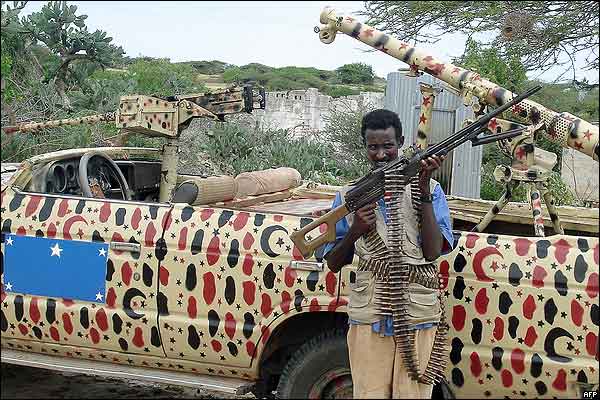
Thursday, June 01, 2006
Shohei Imamura
"The Japanese did not change as a result of the Pacific War—they haven't changed in thousands of years!"
-- Born 1926, Tokyo, Japan. Died 30 May, 2006, Tokyo, Japan
Bras and the Ba'ath
"Hanging above souk stalls, other lingerie styles resort to gimmickry: they are festooned with blinking lights, or play soundbites from Egyptian pop songs or standards such as Old MacDonald had a farm. Damascus, the manufacturing capital of Syria's lingerie industry, exports its products to almost everywhere across the Arab world, from Libyan hairdressing salons to small-town malls in Saudi Arabia".
From an article by Malu Hasla in the New Statesman focus on Syria.
Merchants of ugly

"British Waterways have clearly been planning the eviction even as they negotiated with boat owners over a replacement yard. They are greedy, shifty and dishonest and cannot open their mouths without lying. This eviction is a needless setback. They seem desperate to sell the yard without planning permission."
Philip Pullman in the Guardian quoted on the CastleMill website.
Subscribe to:
Posts (Atom)